

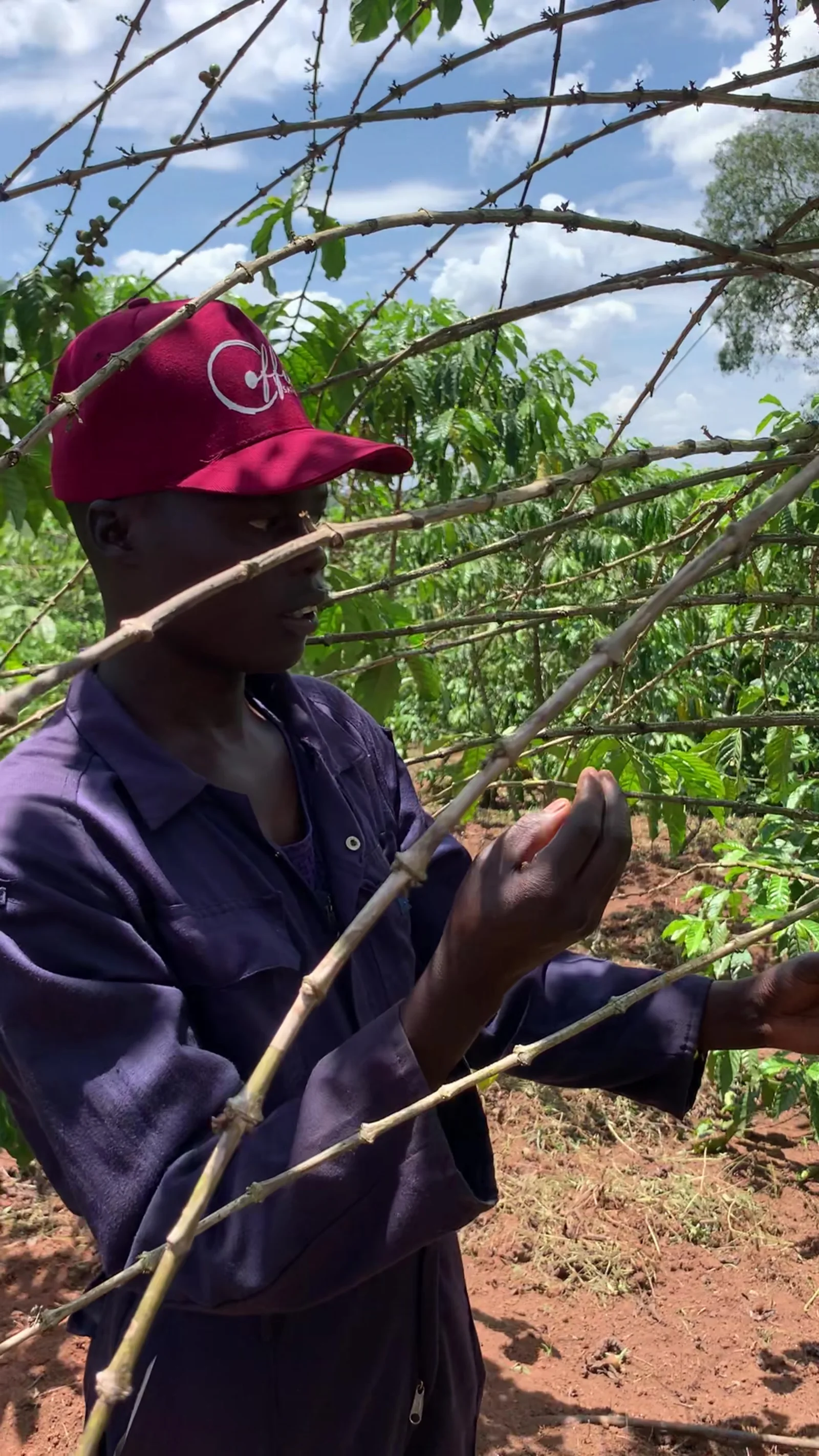
Behind every cup of Ugandan coffee is a number worth sitting with: roughly 3.5 million smallholder farmers, most working less than a hectare of land, who between them grow the beans that just made Uganda the largest coffee exporter on the African continent.
That last part isn't a slogan: it's a 2025 first. Uganda shipped around 8.4 million 60kg bags of coffee that year, overtaking Ethiopia's long-held title. Export earnings hit roughly $2.4 billion, up 64% on the year before. September 2025 alone saw over 844,000 bags leave the country, the biggest single month in Uganda's coffee history. None of that happened at a handful of large estates. Close to 90% of it came from families farming half a hectare to two and a half, cherry by cherry, the same way coffee has been grown here for generations.
A quiet revolution that started in policy
The story of how Uganda got here really starts in 1991 and 1992, when the government dismantled the state's grip on the coffee trade: fixed prices, centralised buying, export restrictions, all of it. For the first time, farmers could sell directly into international markets, and competition did what competition does: it pulled in investment, pushed up quality, and gave growers a real reason to reinvest in their trees.
Momentum properly took off in 2013, when the Uganda Coffee Development Authority launched a national replanting programme alongside Operation Wealth Creation. Millions of free seedlings went out across the country, not just to individual farms, but through Uganda's traditional kingdoms, Buganda, Ankole, Tooro, Bunyoro and Busoga, and through churches and mosques with land to spare. It's the kind of grassroots-meets-institutional push that's easy to undersell in a headline and impossible to overstate in its actual effect on the ground twelve years later.
Smallholders drive both quality and supply, and two harvests a year give Uganda a stability few origins in the world can match.
What "the future" actually looks like from here
The next chapter isn't just about growing more: it's about growing smarter and keeping more of the value at home. Uganda now exports over 98% of its coffee as raw green beans, and the national strategy is shifting that gradually toward roasted and soluble coffee processed inside the country, so more of every dollar a cup earns stays with the people who grew it. Farmers are being registered into a new national coffee data warehouse, part of an effort to meet the EU's tightening deforestation-and-traceability rules, proof, essentially, that a bag of Ugandan coffee didn't come from newly cleared forest.
Climate change is the harder chapter. Hotter, drier conditions and increasingly unpredictable rain are already showing up in pest pressure, coffee berry borer and leaf rust chief among the worries farmers raise. The response taking shape is agroforestry: growing coffee under the shade of native trees, the way many Ugandan farms already do instinctively, which protects the cherries, steadies the soil, and needs far less chemical input than open-sun farming elsewhere.
Quick facts
- Around 3.5 million smallholder farmers grow Uganda's coffee, most on less than a hectare.
- Uganda overtook Ethiopia in 2025 to become Africa's largest coffee exporter by volume.
- September 2025 set an all-time monthly export record for the country.
- A national replanting programme launched in 2013 distributed free seedlings through Uganda's traditional kingdoms and faith institutions.
- Farmers are now being registered into a national data warehouse to meet international traceability requirements.
Every one of those numbers has a face behind it: a specific person on a specific hillside who decided, this season, to plant one more row. Meeting them, even briefly, changes how the coffee in your cup tastes tomorrow morning.